
Leading Through Transformation: Lessons in Growth, Alignment, and Value Creation with Shawn Morris, Former CEO, Privia Health
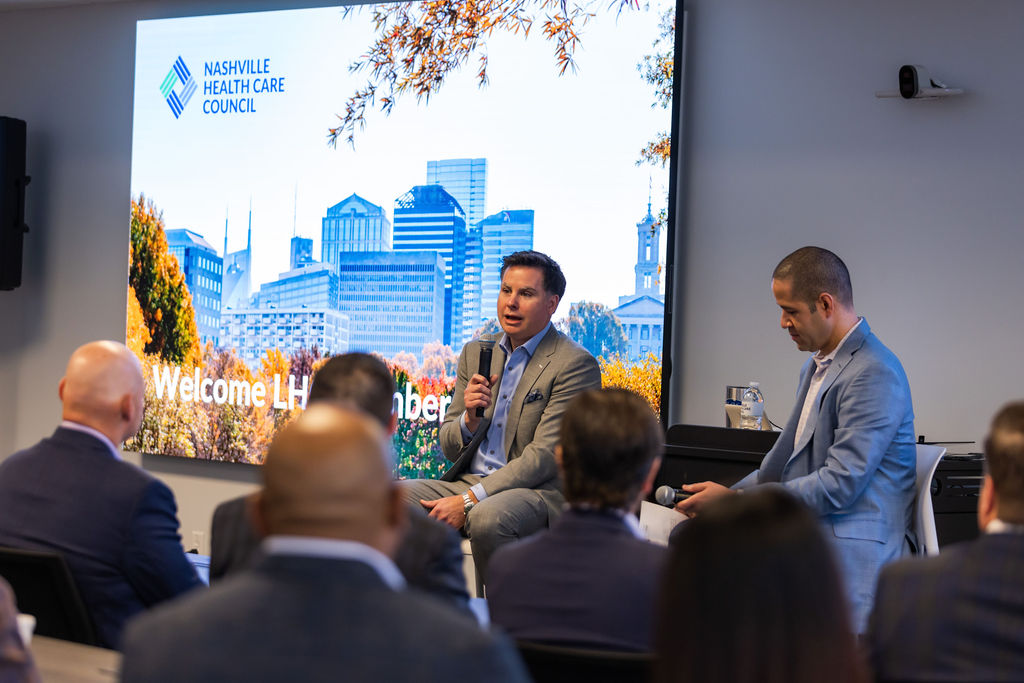
At the latest Council Executive Forum, healthcare executive Shawn Morris, Former CEO, Privia Health, shared candid reflections from his leadership journey. Through stories of scaling organizations, navigating board dynamics, building physician engagement, and leading a company through significant transformation, Morris offered practical lessons on what it takes to create alignment and drive sustainable growth.
Defining the Strategy Before Driving Change
When Morris joined Privia, he quickly realized that employees across the organization had different answers to a fundamental question: What does Privia actually do?
As he met with employees throughout the company, he found there was no consistent understanding of the organization's mission, customer, or value proposition. Many employees viewed patients as the company's primary customer. Morris challenged that thinking, helping the organization recognize that while improving patient care remained the ultimate goal, Privia's direct customer was the physician.
That distinction became foundational to the company's strategy. By focusing on helping physicians operate more efficiently, reduce administrative burdens, improve financial performance, and succeed in value-based care arrangements, Privia could ultimately enable better patient outcomes. Establishing this shared understanding became a critical first step in aligning employees, physicians, board members, and investors around a common vision.
The process required significant communication and education. Leadership worked to develop a clear organizational story that could be understood internally by employees and externally by investors, physician partners, and board members. Through regular all-company meetings and ongoing conversations, the organization built alignment around a shared understanding of who they served and how they created value.
Building a Culture Around Alignment
Throughout the discussion, Morris emphasized that culture cannot be owned by a single leader. While executives are responsible for shaping culture, every employee contributes to it.
As Privia evolved, some employees embraced the company's future direction while others remained deeply attached to previous strategies. Rather than forcing widespread organizational change through turnover, Morris found that many individuals ultimately self-selected out of the organization when they realized they no longer aligned with where the company was headed.
The leadership team focused on creating clarity around the company's purpose, goals, and expectations while helping employees understand how their individual contributions connected to broader organizational success. Transparency, communication, and accountability became central components of the culture-building process.
At the same time, Morris stressed the importance of ensuring people were in roles that matched their strengths. In many cases, highly talented individuals simply needed to be repositioned into roles where they could be more successful. Building the right team wasn't always about finding new talent—it was often about recognizing existing talent and placing people where they could thrive.
Aligning Incentives Across the Organization
One of the strongest themes throughout the conversation was the importance of incentive alignment.
Morris shared how Privia worked to connect employee compensation, equity participation, and performance goals directly to organizational outcomes. The company expanded bonus opportunities beyond senior leadership and created broader equity ownership throughout the organization, helping employees think like owners rather than simply workers.
This approach extended beyond Privia employees. Physician partners were also brought into the company's long-term vision through governance structures, leadership development opportunities, and equity participation.
According to Morris, alignment happens when people understand how the company creates value and can clearly see how their efforts contribute to that success. Financial incentives alone were not enough, but when paired with clear communication and a shared purpose, they became a powerful tool for driving engagement and accountability across the organization.
Supporting Physicians as the Core Customer
A significant portion of the conversation focused on physician engagement and the realities physicians face as healthcare becomes increasingly complex.
Morris noted that most physicians enter medicine to care for patients—not to manage administrative workflows, revenue cycles, staffing challenges, payer contracts, or technology implementations. Privia's role was to remove those burdens and allow physicians to focus on patient care.
To accomplish this, the company worked closely with physician groups to identify what success looked like for each practice. For some physicians, success meant increasing profitability. For others, it meant reducing time spent on administrative work, improving work-life balance, or creating more time with patients.
Rather than applying a one-size-fits-all approach, Privia developed individualized plans, dashboards, and operational support systems that reflected the goals of each physician group. The company focused on helping practices improve operations, navigate value-based care contracts, leverage technology more effectively, and ultimately create better experiences for both providers and patients.
Importantly, Morris stressed that recognizing physicians as the customer did not diminish the importance of patients. Throughout the organization's transformation, patient stories remained central to company meetings and communications. The goal was always to improve patient outcomes, but Privia believed the best way to achieve that was by empowering physicians to spend more time delivering care and less time managing administrative complexity.
Taking a Disciplined Approach to Risk
One of the most insightful parts of the discussion centered on risk-based care and the pressure many healthcare organizations face to take on greater financial risk.
Drawing on decades of experience in Medicare Advantage and value-based care, he believed the industry had become overly focused on risk coding and financial engineering rather than the underlying goal of improving patient outcomes. While many organizations were pursuing full-risk contracts, Morris questioned whether those models were sustainable over the long term, particularly as regulators continued to refine and adjust risk adjustment methodologies.
Instead, Privia focused on shared-risk arrangements that better aligned incentives among physicians, payers, and the company itself. The strategy allowed the organization to participate in value creation while avoiding exposure to costs that physicians could not reasonably control, such as specialty pharmaceuticals or high-cost oncology treatments.
As industry dynamics shifted and reimbursement models evolved, Privia's more measured approach proved beneficial. While many organizations built around full-risk models struggled, restructured, or exited the market altogether, Privia remained focused on aligning incentives, supporting physicians, and creating long-term value. The discussion highlighted a broader leadership lesson: growth opportunities are not always worth pursuing simply because the market rewards them in the short term.
Strategic Planning as an Ongoing Process
The discussion also highlighted the challenges of strategic planning within a rapidly growing organization.
Morris described strategic planning not as a single annual exercise, but as a continuous process that requires alignment from the boardroom to the front lines. At Privia, that meant connecting company-wide objectives to local physician groups, individual operators, and employees across the organization.
To support that structure, Privia organized physician groups into regional pods led by both operators and physicians. Goals were established at multiple levels, ensuring that organizational priorities could be translated into measurable actions throughout the business.
The process created accountability while allowing flexibility for individual practices and markets. Morris acknowledged that strategic planning is never static. Organizations must continually adapt as market conditions change, while still maintaining alignment around a shared direction.
Making Difficult Decisions to Create Long-Term Value
As Privia pursued profitability and growth, leadership was forced to make several difficult decisions, including exiting markets, restructuring contracts, and walking away from business that no longer aligned with the company's strategy.
One example Morris shared involved evaluating every major contract and market opportunity through the lens of long-term value creation. In some cases, that meant ending relationships that had helped fuel earlier growth but could no longer support the organization's future direction.
The company exited an unprofitable market, reassessed physician contracts, and evaluated payer relationships with a renewed focus on financial sustainability. These decisions were often unpopular and required extensive communication with employees, physicians, board members, and investors.
However, Morris emphasized that disciplined decision-making ultimately positioned the company for stronger financial performance and future growth. In his view, leaders must be willing to make difficult choices when the data and long-term strategy support them.
Managing Boards, Investors, and Growth Expectations
Morris also offered a candid look into the realities of board governance and investor management.
Over time, Morris worked to simplify board communications, focus discussions on strategic decisions, and build alignment with investors before meetings occurred. He stressed that many of the most important board conversations happen before board meetings begin through proactive communication and relationship building.
The conversation also touched on the challenges of balancing investor expectations with long-term strategy. While investors often push for accelerated growth and greater risk-taking, Morris emphasized the importance of maintaining conviction in a strategy that serves the long-term interests of the business.
Morris acknowledged, however, that this approach was often unpopular with investors, who, as mentioned, favored more aggressive risk-taking strategies that promised faster growth. However, he believed the company's responsibility was to build a sustainable business rather than chase market trends.
As the company grew, Privia navigated private equity ownership, public market expectations, and unexpected external events ranging from the COVID-19 pandemic to the collapse of Silicon Valley Bank. These experiences reinforced the importance of staying focused on the company's core strategy while remaining adaptable when circumstances change.
Leadership Lessons from a Career of Growth
Reflecting on his career, Morris shared that many of his most valuable lessons came not from successes, but from setbacks and failures. While Privia's eventual public offering represented a significant milestone, he emphasized that long-term success was built through consistent execution, disciplined decision-making, and a willingness to adapt.
Throughout the conversation, Morris returned to several recurring themes: creating clarity around strategy, aligning incentives, investing in people, supporting physicians, and maintaining a relentless focus on operational excellence.
His experiences served as a reminder that sustainable growth is rarely driven by a single breakthrough moment. Instead, it is the result of continuous alignment between people, strategy, culture, and execution, all working together toward a common goal.
For participants, the discussion offered an inside look at the realities of leading through transformation and emphasized a lesson applicable across industries: organizations achieve lasting success when they remain clear about who they serve, disciplined in their decision-making, and intentional about aligning people around a shared vision.
Learn more about the Nashville Health Care Council